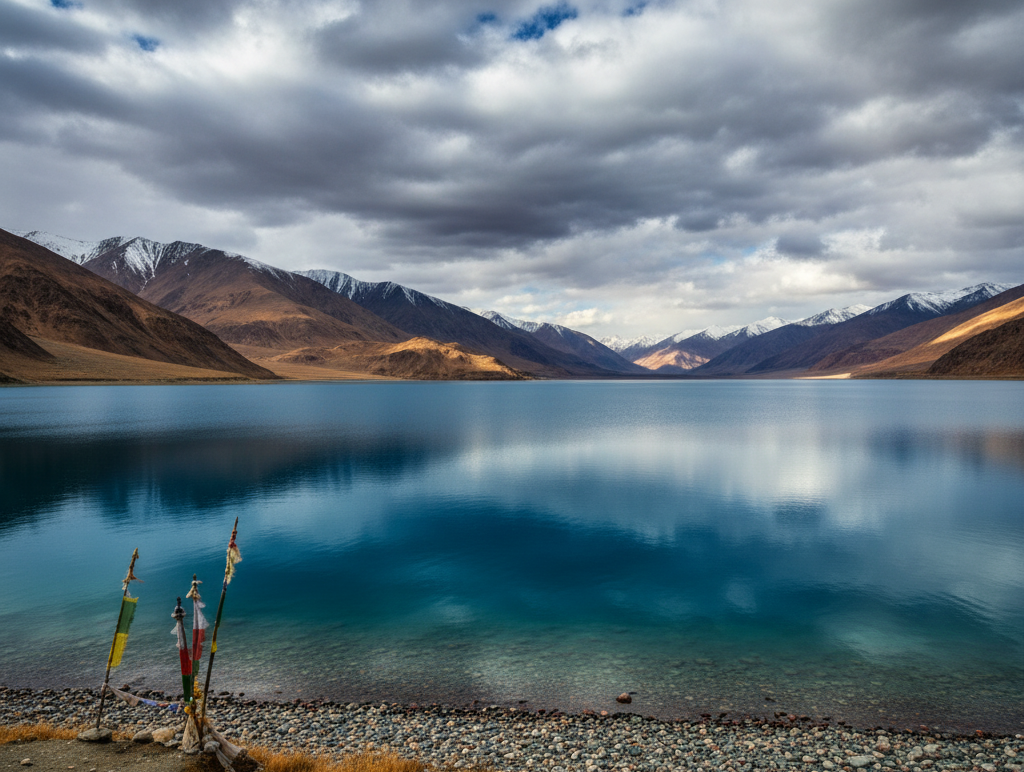
Pangong Tso—one of Ladakh’s most iconic lakes—is famous for its crystal-blue waters that change shades throughout the day. Stretching across India and Tibet at an altitude of 4,225 meters, this high-altitude lake is a must-visit for travelers seeking surreal landscapes, adventure, and peace.
However, because of the extreme climate and altitude, choosing the right time to visit Pangong Tso is crucial. Each season offers a completely different experience—from frozen white expanses in winter to vivid blue waters in summer.
This guide explains the best time to visit Pangong Tso, weather patterns, road accessibility, travel tips, and what to expect in every season.
Best Time to Visit Pangong Tso (Quick Answer)
✔ Best Overall: May to September (pleasant weather, clear blue lake, open roads, perfect for sightseeing)
✔ Best for Photography: June to August
✔ Best for Frozen Lake Experience: Late December to February
✔ Best for Quiet, No Crowd Experience: April & October
Pangong Tso Weather Overview
| Month | Temperature (°C) | Lake Condition | Road Condition |
|---|---|---|---|
| Nov–Mar | -25°C to -5°C | Completely frozen | Roads often closed by snow |
| Apr | -10°C to 8°C | Partially thawing | Roads begin to reopen |
| May–Jun | -1°C to 15°C | Blue & semi-clear waters | Roads fully open |
| Jul–Aug | 5°C to 20°C | Deep blue water | Monsoon in other regions |
| Sep–Oct | -5°C to 15°C | Clear sky, vivid colors | Roads open, cold nights |
Season-by-Season Breakdown
1. Summer (May to June) – The Best Time to Visit
Temperature: 0°C to 15°C
Roads: Fully open from Leh via Chang La
Lake condition: Crystal-clear blue, perfect visibility
Why visit in summer
-
Most comfortable weather
-
Ideal for photography
-
All camps, cafes, and homestays open
-
Clear Himalayan landscapes
-
Less risk of altitude weather disruptions
Recommended for:
Families, bikers, photographers, couples, first-time travelers
2. Monsoon-Season Travel (July to August) – Vibrant Colors & Mild Weather
Temperature: 5°C to 20°C
Roads: Open, but water crossings may increase due to glacier melt
(Ladakh itself doesn’t receive monsoon rain, but nearby regions may.)
Why visit during monsoon
-
Lake turns deep turquoise and navy blue
-
Warm days and comfortable evenings
-
Perfect for long-exposure and drone photography
-
Snow has melted—smooth travel
Things to be careful about
-
Water streams on the road may get strong in the afternoon
-
Road delays possible due to melting snow
3. Autumn (September to October) – For Photographers & Serenity Lovers
Temperature: -5°C to 15°C
Lake condition: Extremely clear blue water
Skies: Crisp, cloudless
Why visit in autumn
-
Fewer tourists
-
Sharp visibility and golden light
-
Comfortable day climate
-
Best for astrophotography (Milky Way visible)
What to expect
-
Night temperatures drop drastically
-
Some camps start closing in late October
❄️ 4. Winter (November to February) – For Frozen Lake Lovers
Temperature: -25°C to -5°C
Lake condition: Completely frozen (up to 3–4 feet thick)
Roads: Often closed due to heavy snow, especially Chang La
Why visit in winter
-
Unique experience of walking on the frozen lake
-
Minimal crowd
-
Stunning snow-covered mountains
Important warnings
-
Extremely harsh weather
-
Only possible if roads are open and you have local support
-
Not suitable for families or people with health issues
-
Oxygen levels very low
5. Early Spring (March to April) – Transition Season
Temperature: -10°C to 8°C
Lake condition: Partially frozen, slowly thawing
Roads: Begin to open, but unpredictable
Why visit in early spring
-
See the lake shift from white to blue
-
Fewer tourists
-
Good for peaceful trips
Limitations
-
Weather can change rapidly
-
Nights extremely cold
-
Limited accommodation
Month-by-Month Summary
Best Months:
May • June • July • August • September
Good Months (with caution):
April • October
For Frozen Lake Only:
December • January • February
Not Recommended:
Mid-November to Early March (unless you are an experienced winter traveler)
Travel Tips for Visiting Pangong Tso
1. Acclimatize Properly
Spend at least 1–2 nights in Leh before visiting Pangong due to its altitude of 4,225m.
2. Start the journey early
Roads are safer before glacier melt increases water flow (usually after 2 PM).
3. Dress in layers
Weather can shift from sunny to freezing wind within minutes.
4. Carry essentials
-
Warm jackets
-
Gloves & cap
-
Sunscreen (UV is very strong)
-
Power bank
-
Water & light snacks
5. No swimming
The water is extremely cold—risk of hypothermia.
6. Stay overnight only if conditions are safe
Nights at Pangong can drop below zero even in May.
How Many Days Do You Need for Pangong Tso?
Most travelers choose one of these:
Option 1: Leh → Pangong → Leh (Day Trip)
✔ Safe
✔ Comfortable
❌ Long journey (10–12 hours)
Option 2: Leh → Pangong (1 Night Stay) → Leh
✔ Best for sunrise view
✔ Less tiring
✔ Good for photographers
FAQs About the Best Time to Visit Pangong Tso
1. Which month is Pangong Tso the most beautiful?
June to September – perfect blue shades and good weather.
2. Can we visit Pangong Tso in winter?
Yes, but only if roads are open. Conditions are extremely cold and harsh.
3. Is April a good time?
Yes, but the lake may still be partially frozen and nights very cold.
4. When is Pangong Tso frozen?
From mid-November to March, with peak frozen months in January & February.
Final Recommendation
If you want the perfect Pangong experience, travel between:
⭐ May to September
You’ll get:
✔ Best weather
✔ Blue lake views
✔ Open roads
✔ Comfortable travel
✔ All camps & hotels available